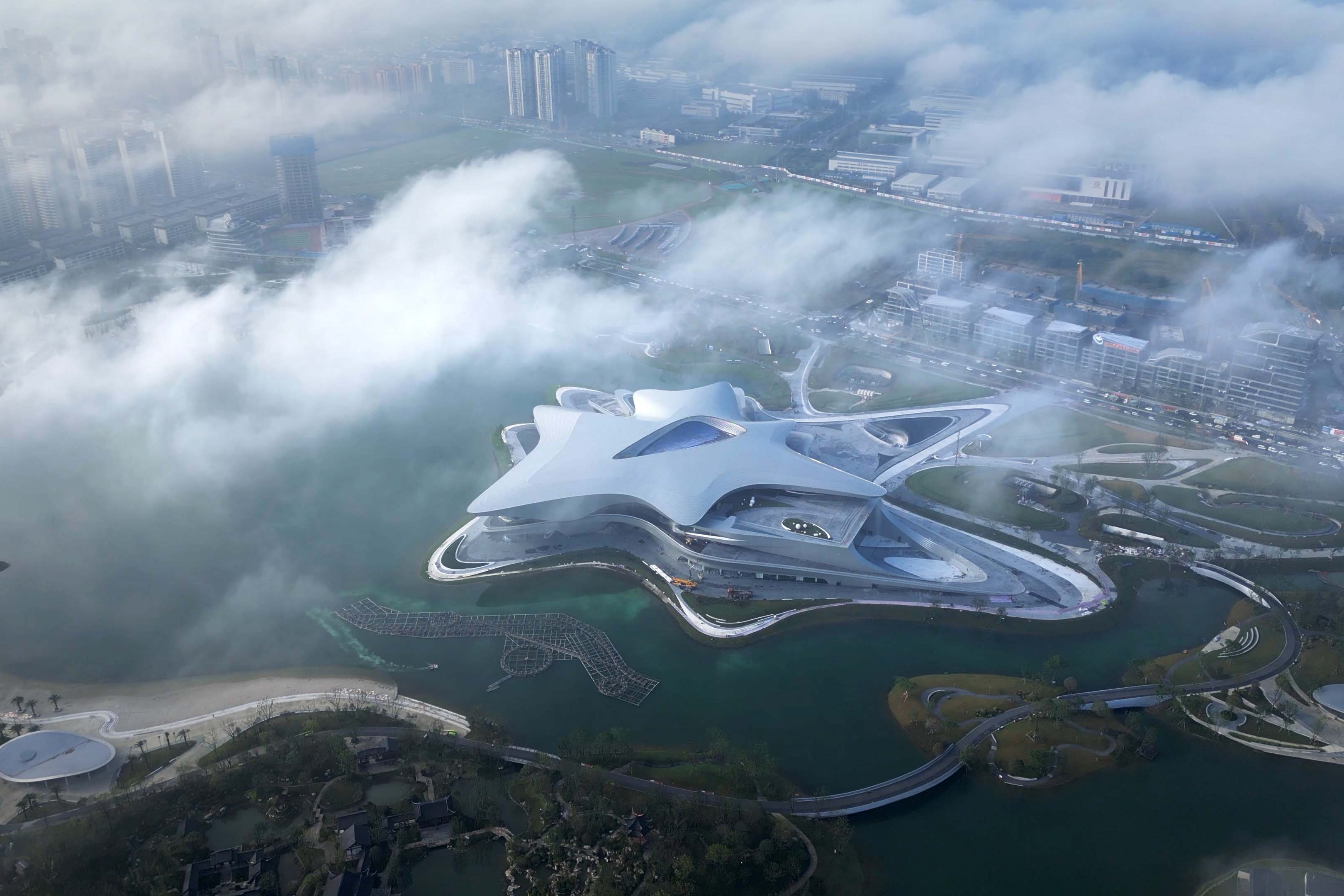
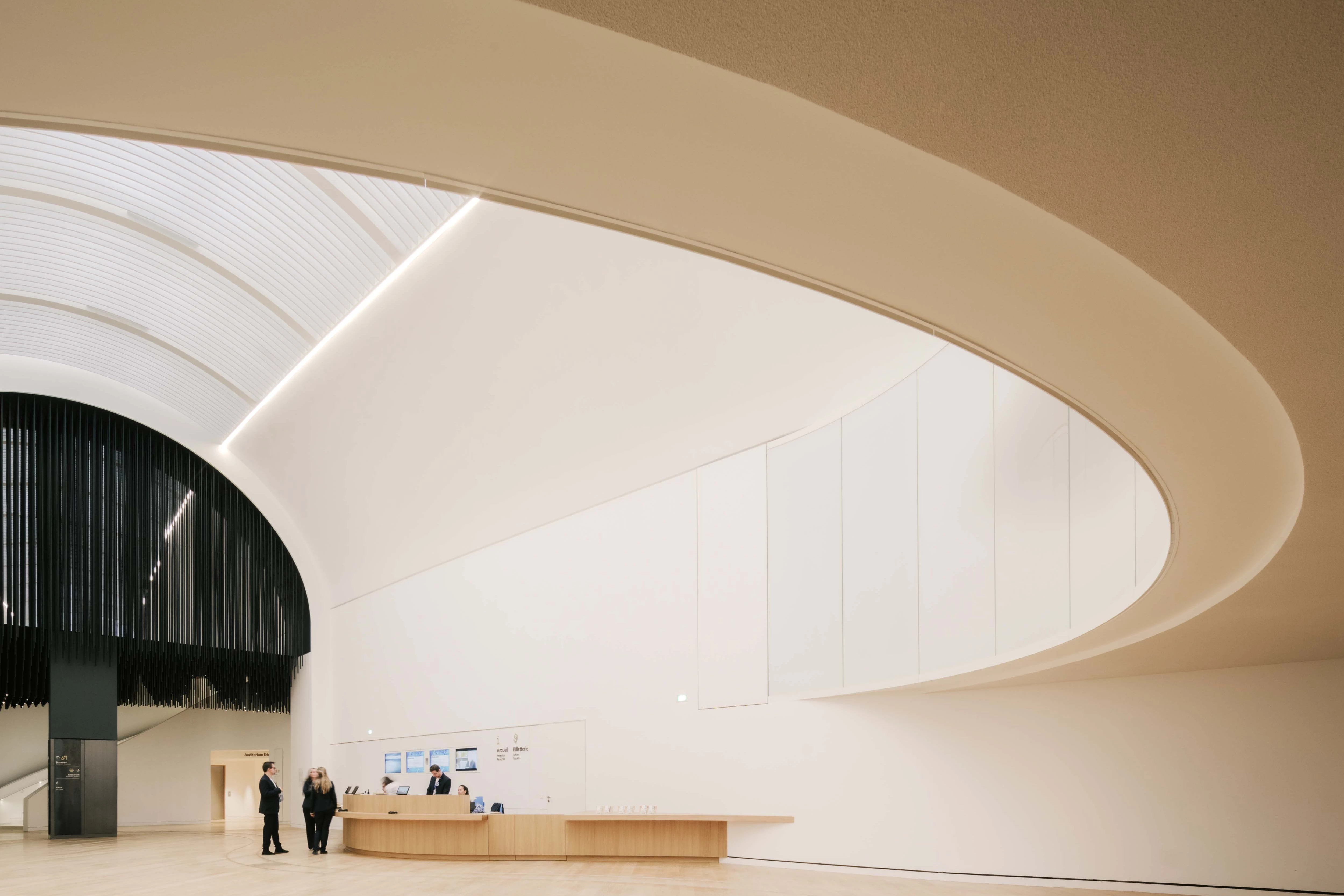
中國廣東 順德雲鷺濕地博物館

本案結合「觀鳥塔」和「博物館」兩大功能,且鄰近一座棲息著兩萬五千隻白鷺的生態島,在提供賞鳥體驗的同時,提高遊客對濕地生態的認識。此濕地計畫起源於前人在此種植的一片竹林,經歷幾十年的努力,這片綠洲成為都市中的「白鷺天堂」。當地政府更與科學家、工程師和設計師合作,恢復水系、更新竹林,將白鷺園保護區擴大近十三倍,進而重塑成雲鹿濕地公園。

The Yunlu Wetland Museum, located in Shunde's Yunlu Wetland Park beside an ecological island home to 25,000 egrets, combines a bird-watching tower and museum to raise public awareness of wetland ecology while offering a unique birding experience. The project originated from a bamboo forest planted 26 years ago by "Uncle Bird" Xian Quanhui. His efforts, sparked by the arrival of egrets, gradually transformed the area into an urban "egret paradise." Today, the Shunde government has expanded this protected zone 13-fold, working with scientists, engineers, and designers to restore water systems, renew bamboo groves, and redevelop the park.

為保護濕地環境,團隊先調查現有樹木,再精準選定基地位置,縮小建築占地、旋轉樓層角度,盡量減少砍伐原生樹木,兼顧視野,同時弱化建築存在感,讓其隱沒於雪松林後。從白鷺島遠望,博物館幾乎隱身於綠蔭之中,屋頂的蓮花池亦進一步淡化建築量體。
The architects concealed the building behind cedar trees to blend quietly into the surroundings. Composed of four vertically stacked concrete tubes, the structure resembles horizontally rotating "lenses" capturing egret movements. Designed with humility, the building minimizes its presence and harmonizes with local wildlife. Viewed from Egret Island, it almost vanishes into the subtropical forest.


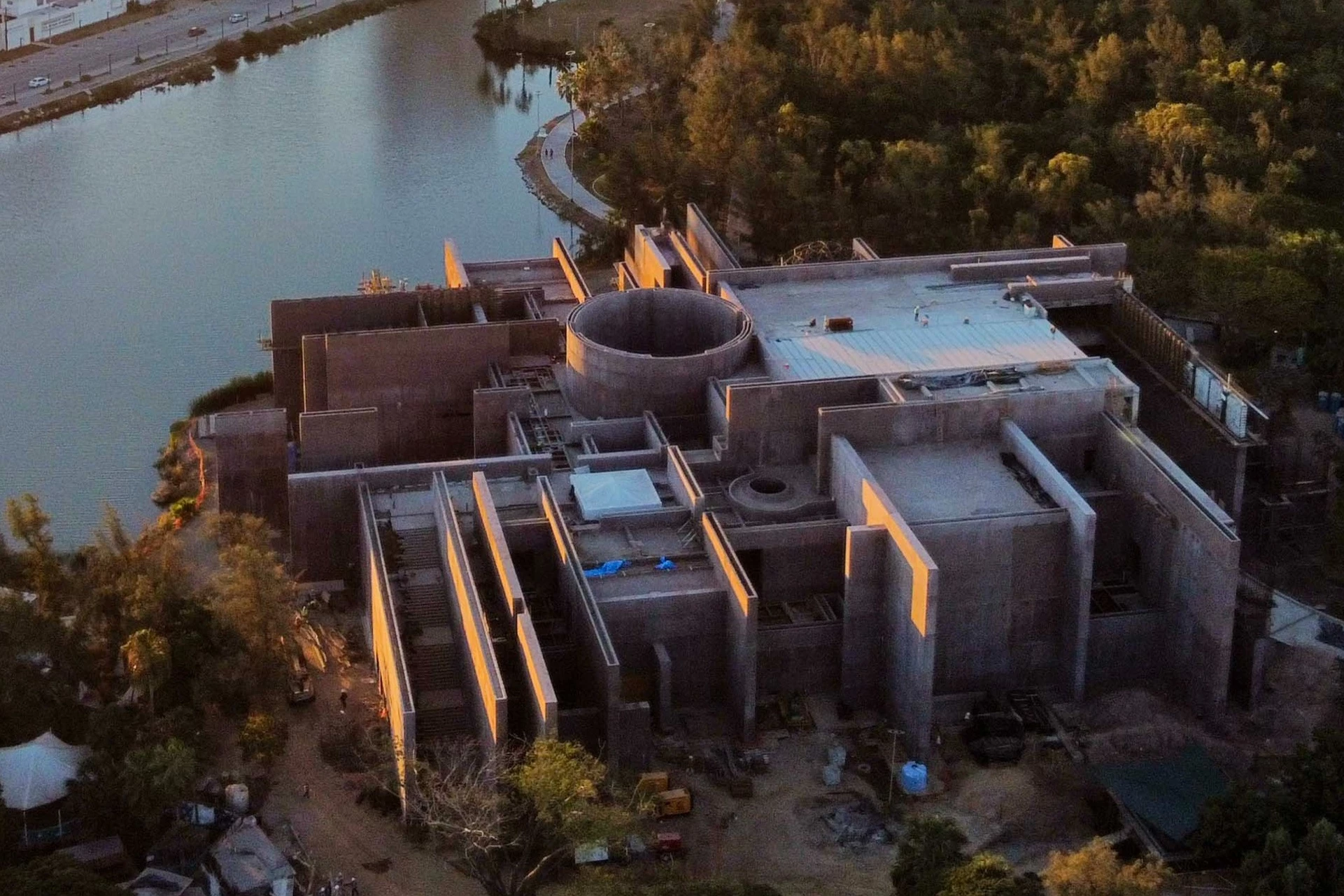
外立面採現澆松木模混凝土,細膩紋理呼應四周森林,展現自然質地。建築由四個垂直堆疊的混凝土筒體組成,如水平橫移的鏡頭,捕捉白鷺鷥的動態;各筒體依景色旋轉至最佳觀景角度,構成錯落有致的「框景」,將視線重心由人轉向環境。自一至四樓,來者的目光依序落在樹根、樹幹、樹冠與樹梢,在高低錯落中觀察搖曳樹影與飛鳥身影。
Each tube is rotated to optimize viewing angles, creating four staggered "frames" inside. From bottom to top, floors face tree roots, trunks, crowns, and treetops, inviting visitors to observe shifting shadows and birds in flight from varied heights. This breaks from traditional human-centered design, offering a nature-focused perspective.

不僅如此,四個重疊的筒體更形成一個三角形中庭,連結著四層交錯體量。其中,以盒式混凝土結構系統製成的每個筒體,側牆、頂板與底板都共同承載重量。
A vertical triangular atrium carved through the stacked tubes connects all floors, serving as a shared visual anchor. Visitors look out through rotated tubes framing nature like curated landscape paintings. The box-type concrete structure uses side walls, roofs, and bases to bear loads, while skylights soften sunlight entering the interior, allowing visitors to sense seasonal rhythms and nature's presence.


陽光穿過天窗,穿越樑體後柔和地灑入內部,即使身在室內,亦能切身感受季節更迭與自然氛圍。而中庭也成為瞭望多重視角的絕佳據點,站在此處,訪客能自不同角度眺望周遭景色,彷若以筒取景,一幀幀框景隨之映入眼簾。
To protect the wetland, architects surveyed 560 trees, positioned the building to minimize footprint, and rotated floors to avoid unnecessary tree removal. The exterior features pine-textured cast-in-place concrete that echoes the forest, while lotus ponds on the roof soften the building's presence from above.

主要建築師:陸軼辰
結構工程:深圳 WS 工程設計顧問有限公司.深圳 A+E 設計有限公司
施工單位:中國建築第四工程局有限公司.北京益匯達清水建築工程有限公司
建築面積:1800 平方公尺
座落位置:中國廣東
影像:田方方.存在建築.木析.郭詩雨
文字:Link-Arc 建築事務所
採訪:張薰云
Principal Architects:Yichen Lu
Structural Engineering:Shenzhen WS Engineering Design Consultant Ltd..Shenzhen A+E Design Co., Ltd.
Contractor:China Construction Fourth Engineering Division Corp. Ltd.Beijing Yihuida Architectural
Building Area:1800 ㎡
Location:Guangdong Province, China
Photos:Tian Fangfang.Arch-Exist.Alexan DENG.Guo Shiyu
Text:Studio Link-Arc
Interview:Hsun Yun Chang