台北 王宅

熱愛大自然的業主夫婦,對這座擁有地下室的雙層宅邸一見鍾情。看似平凡的選址,承載著他們彼此相伴的溫度,也悄悄呼應著兩人共同的興趣——抱石。起初的規劃構想中,夫婦倆便決定將訓練場域納入居家設計,讓興趣不再是日常生活之外的片段,而是融入其中,共同交織生活節奏。
The nature-loving couple fell in love with this two-story residence with a basement. Though the site may seem unassuming at first glance, it carries the warmth of their daily companionship and subtly reflects their shared passion—rock climbing. They intended to integrate a climbing space into the home, weaving their interest into the rhythms of everyday life.

為了實現在家中建構攀岩牆的想法,團隊透過局部挖除樓板製造挑空,讓牆體得以延伸至一樓,原本陰暗潮濕的地下室亦搖身一變,成為明亮通透的多功能空間。地下室除了具備抱石訓練與健身等機能設置,另設有搭配投影設備的客廳,滿足觀影與休憩所需。
The team partially removed the floor slab to create a double-height space, allowing the climbing wall to extend up to the ground floor. The once dark and damp basement was transformed into a bright, open multipurpose area. In addition to rock climbing and fitness equipment, the basement now includes a lounge with a projector setup for movie nights and relaxation.

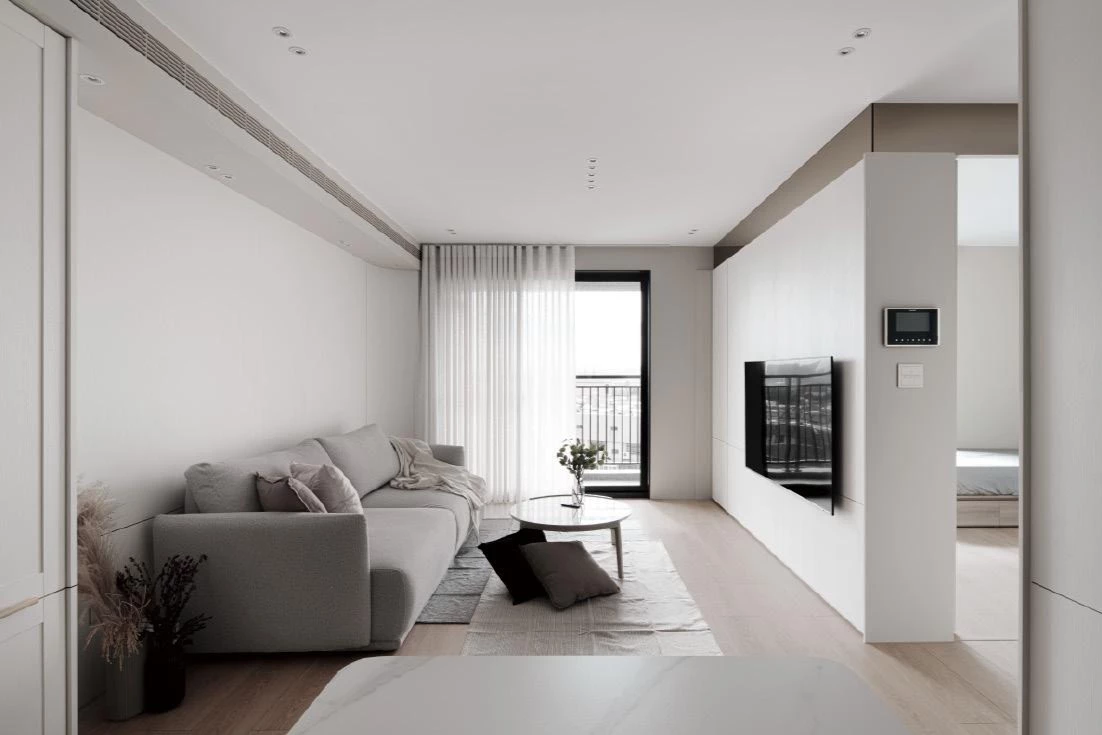
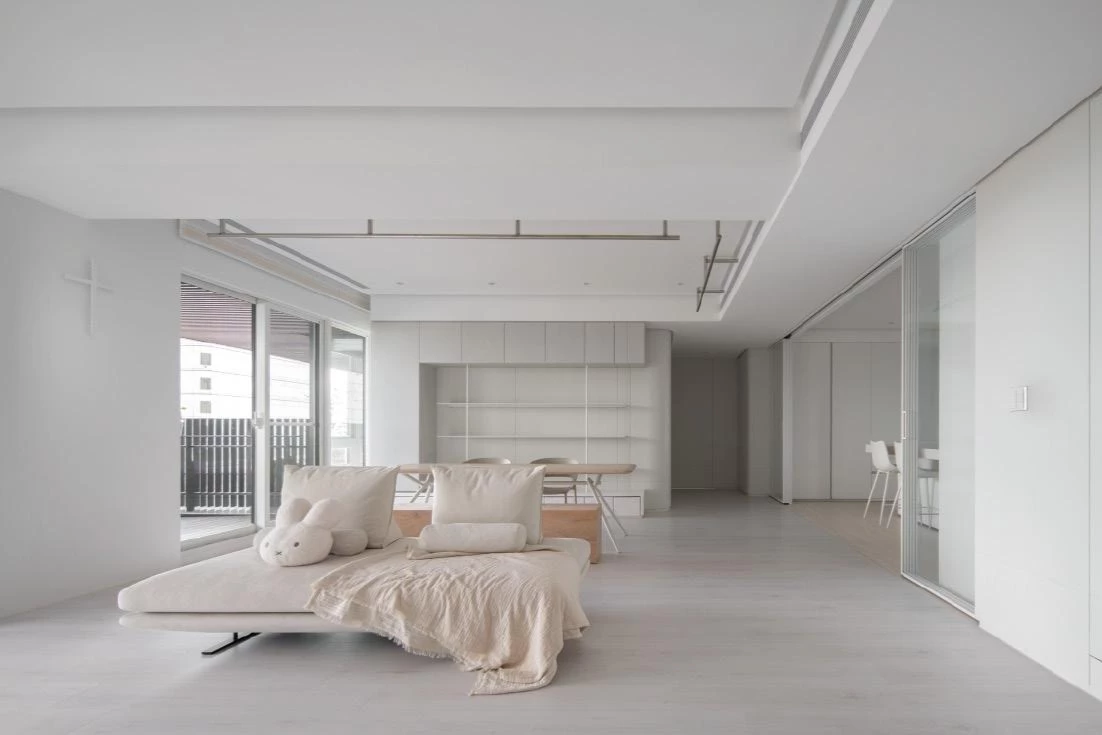
一樓空間依照夫妻倆的生活節奏重新布局,打破傳統「入門即客廳」的格局,改以開放式工作區作為起點,讓辦公、閱讀等日常,在彼此作伴的生活片段中自然展開。設計師以俐落的二分法區分公私領域:一側為開放工作區,滿足女主人在家辦公的需求,另一側則是主臥與衛浴,打造靜謐的休憩空間。
The ground floor was reorganized to align with the couple's lifestyle, breaking away from the traditional layout. Instead, the home begins with an open work area, where daily activities like working and reading unfold naturally in each other's company. The designer employed a clean, two-zone strategy to separate public and private functions: one side houses the open workspace, tailored to the wife's remote work needs, while the other contains the master bedroom and bathroom, offering a tranquil retreat.


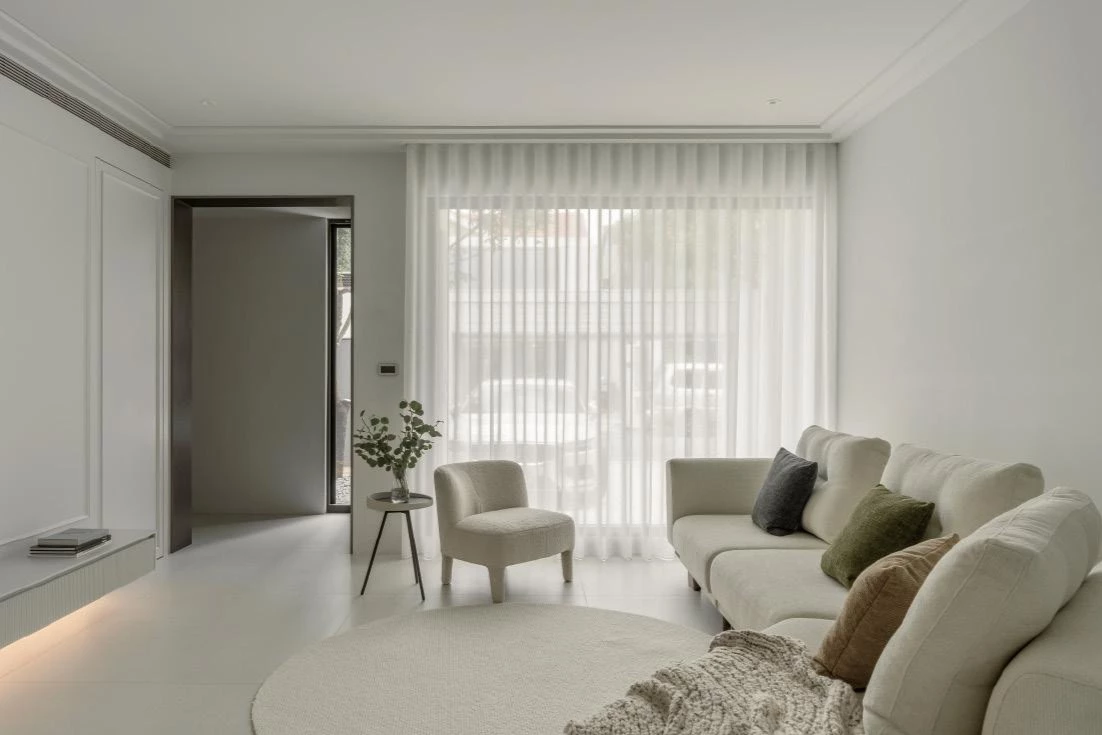
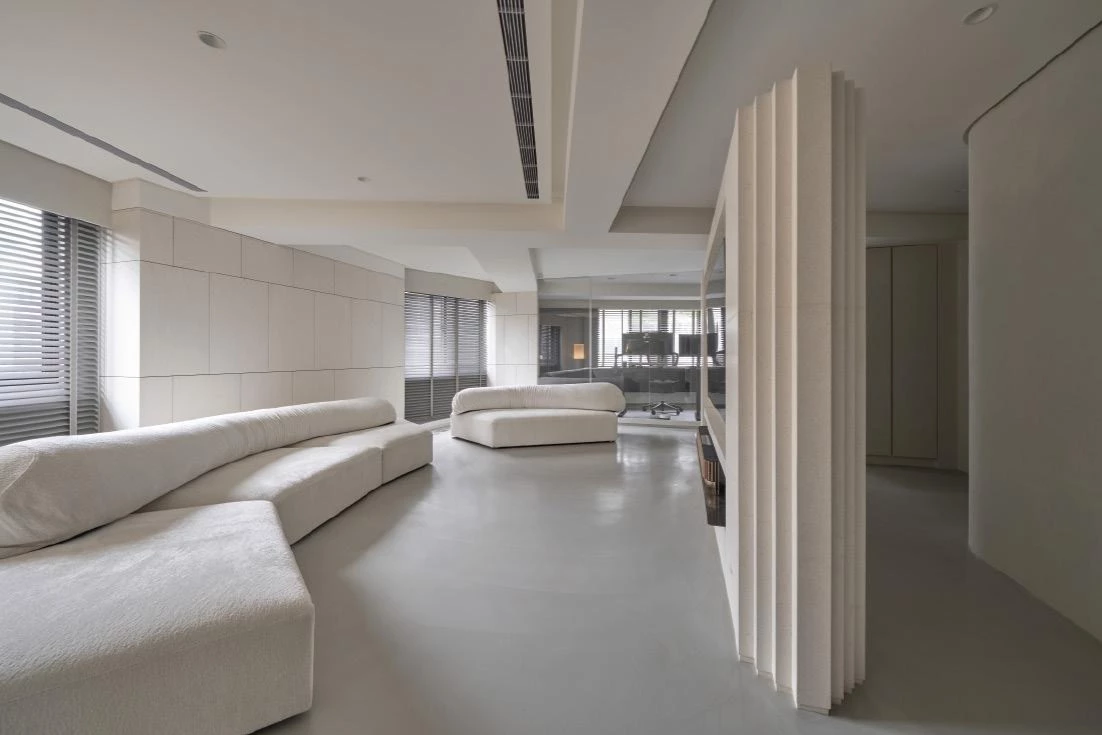
隨處可見的玻璃元素,不僅維持通透視覺,也讓自然光得以穿透樓層、延伸至室內各角。私領域隔間則採漸層玻璃膜,兼顧隱私與採光,營造若隱若現的流動感。天花處整合除濕與空調系統,在保留屋高的同時避免壓迫感,並以拋物線修飾原結構,視覺上更顯柔和

Glass surfaces are used throughout to maintain openness and bring natural light deep into the interior. Gradient glass film defines the private areas, balancing privacy with brightness and creating a soft sense of flow. To preserve ceiling height while avoiding a sense of confinement, dehumidification and air conditioning systems are subtly integrated into parabolic ceiling features, softening the overall visual tone.

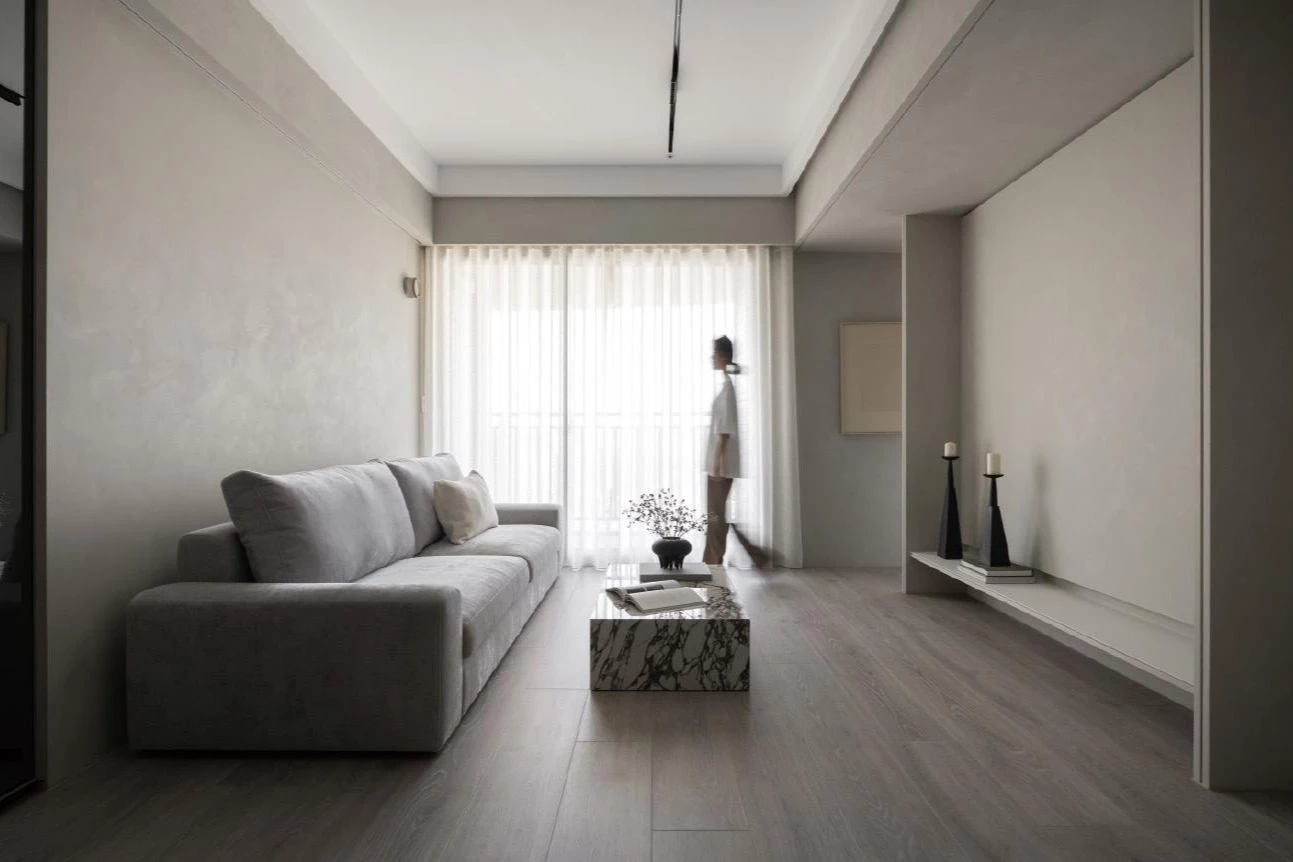
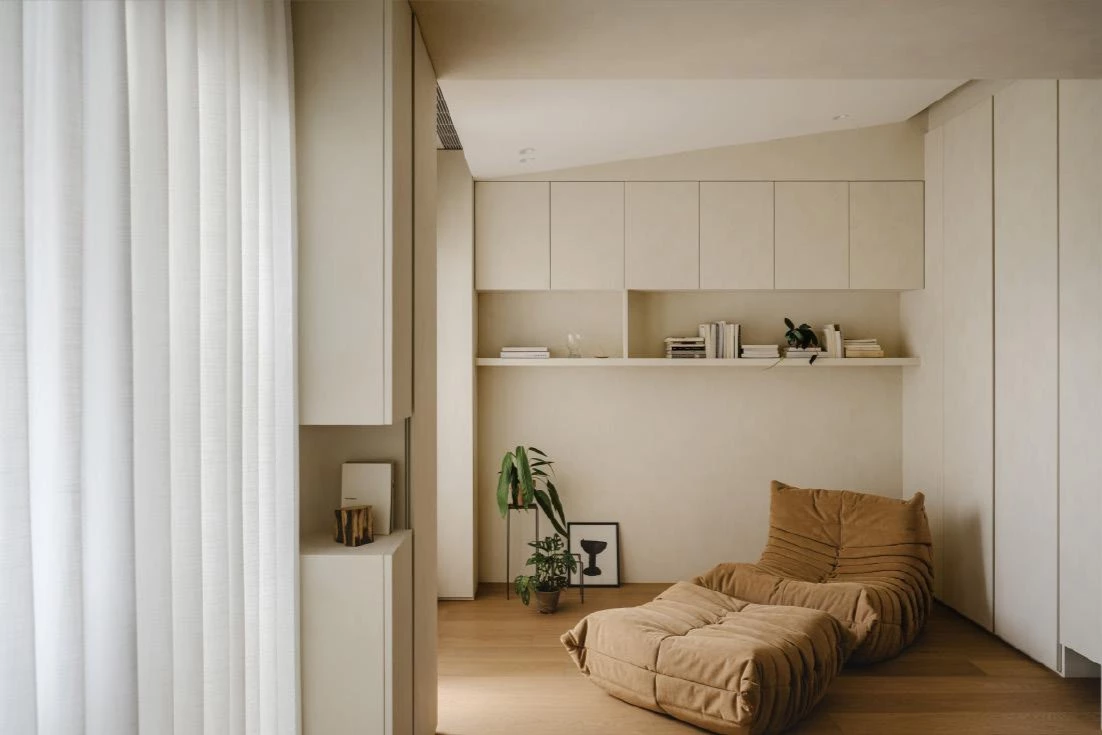
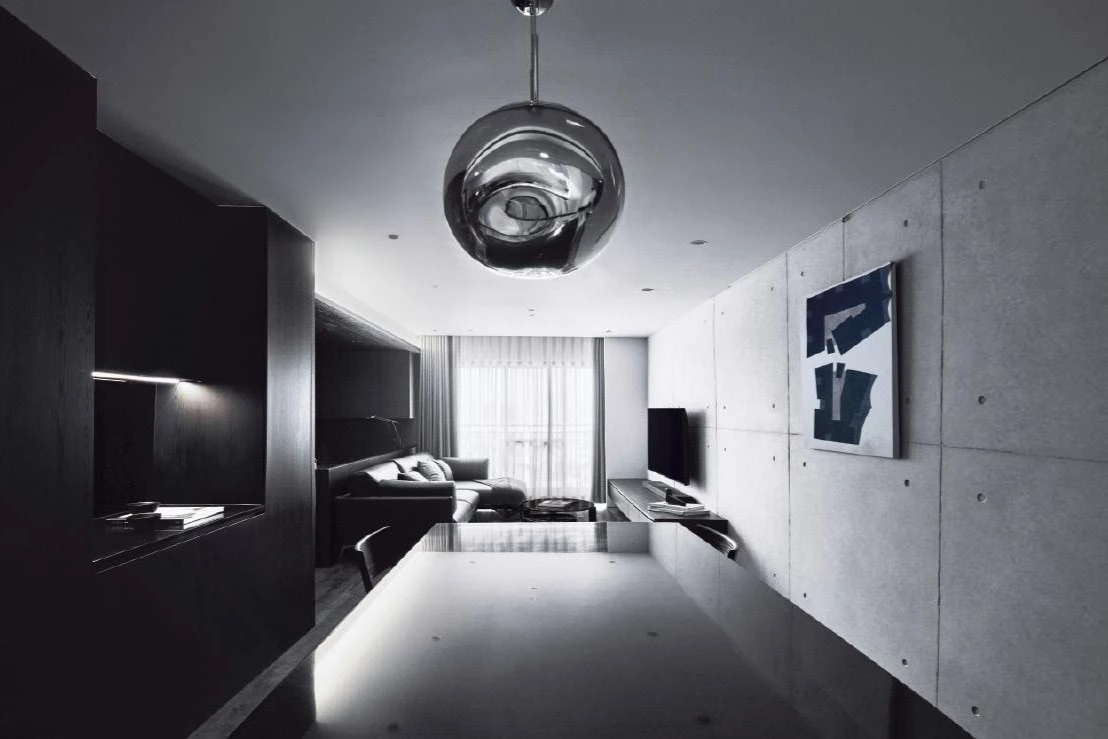
用色與選材方面,呼應屋主對大自然的喜好,全室以大地色系舖陳,並搭配木質與塗料肌理,形塑舒適宜人的氛圍,局部點綴的磚紅則注入活潑視覺節奏。為弱化地下室明顯的結構,設計師選用金屬板包覆樑體,製造視覺層次。樓梯設計更是別出心裁,巧妙融入攀岩運動「向上攀爬」的意象,結合沙發機能與垂直動線,延伸出層層向上的動線規劃。階梯特意選用塗料、磁磚與木皮三種飾面,以交錯堆疊的手法,營造如山壁般的豐富肌理,以及高低錯落的趣味畫面。在此,自然語彙與日常節奏彼此緊扣,愛好也不再單純是的週末消遣,而是生活脈絡的一部分。

The design echoes the love of nature. Earth tones, warm woods, and textured finishes establish a calm, welcoming atmosphere, while accents of brick red add a lively rhythm. To downplay the visual weight of the basement structure, metal panels wrap the exposed beams, creating layered depth. The staircase is particularly inventive, inspired by the act of "climbing upward"—a nod to their hobby. It cleverly integrates seating and circulation, guiding the eye and movement upward through the space. Steps are finished in a mix of paint, tile, and wood veneer, layered to mimic the texture of a mountainside and add playful variation in elevation. Here, the language of nature and the cadence of daily life are tightly intertwined—passion becomes more than a weekend activity; it becomes an essential part of living.

主要設計:戴伯宇.黃姿穎
空間面積:一樓 90㎡.地下一樓 55㎡
主要建材:礦物塗料.無接縫地坪.胡桃實木皮.戶外塑木地板.大板磚.玻璃磚.樺木夾板
座落位置:台灣台北
影像:Ciao Pie 空間攝影
採訪:蘇新婷