新北 王宅

當家的主角從大人轉向孩子,空間的樣貌也隨之改變。不到二十坪的住宅中,設計核心圍繞於一對年輕夫妻與孩子的日常互動,安全性、活動性與空間串連是規劃的三大關鍵詞。
When the main character of the household shifts from adults to children, the spatial configuration follows suit. Less than 66 square meters, the design centers on the daily interactions of a young couple and their child. Safety, mobility, and spatial continuity are the three key concepts guiding the planning process.

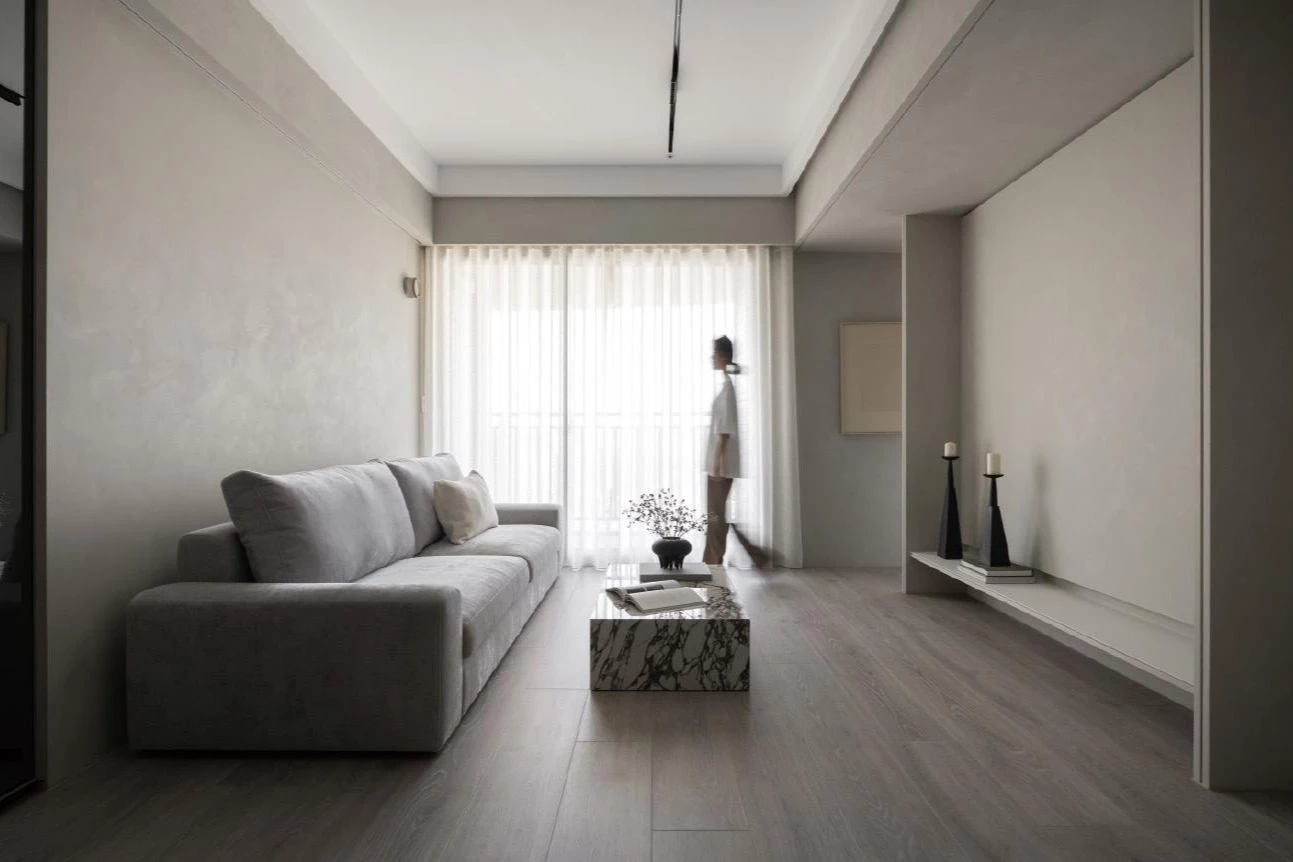
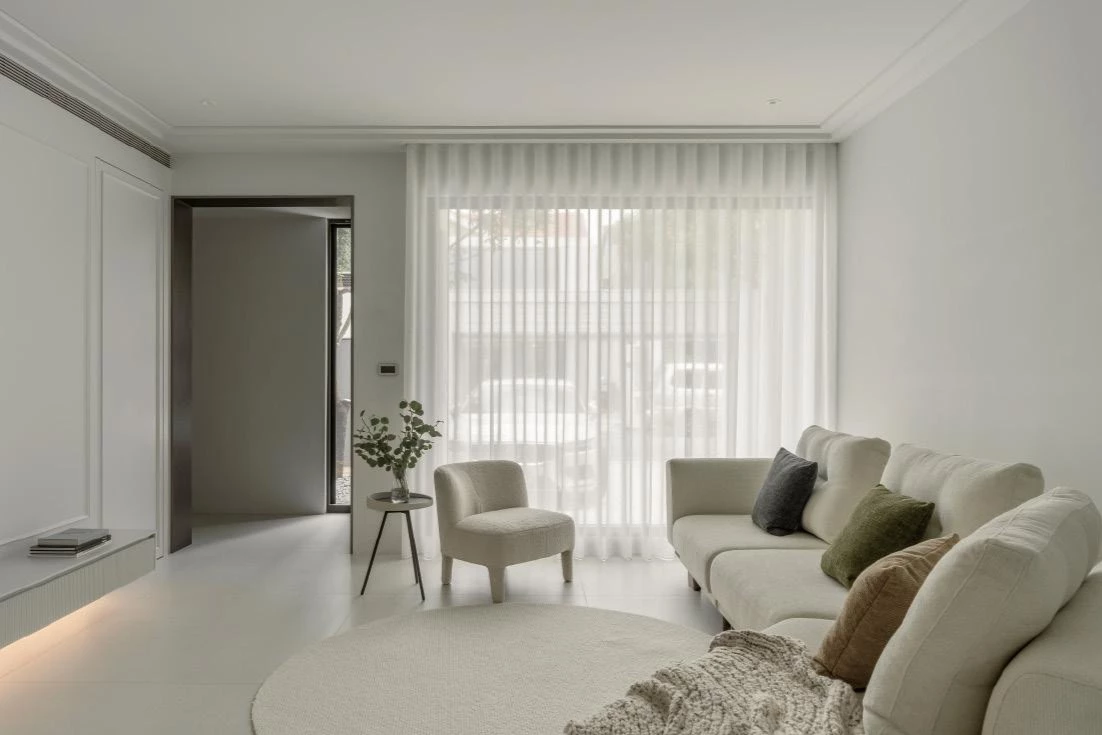
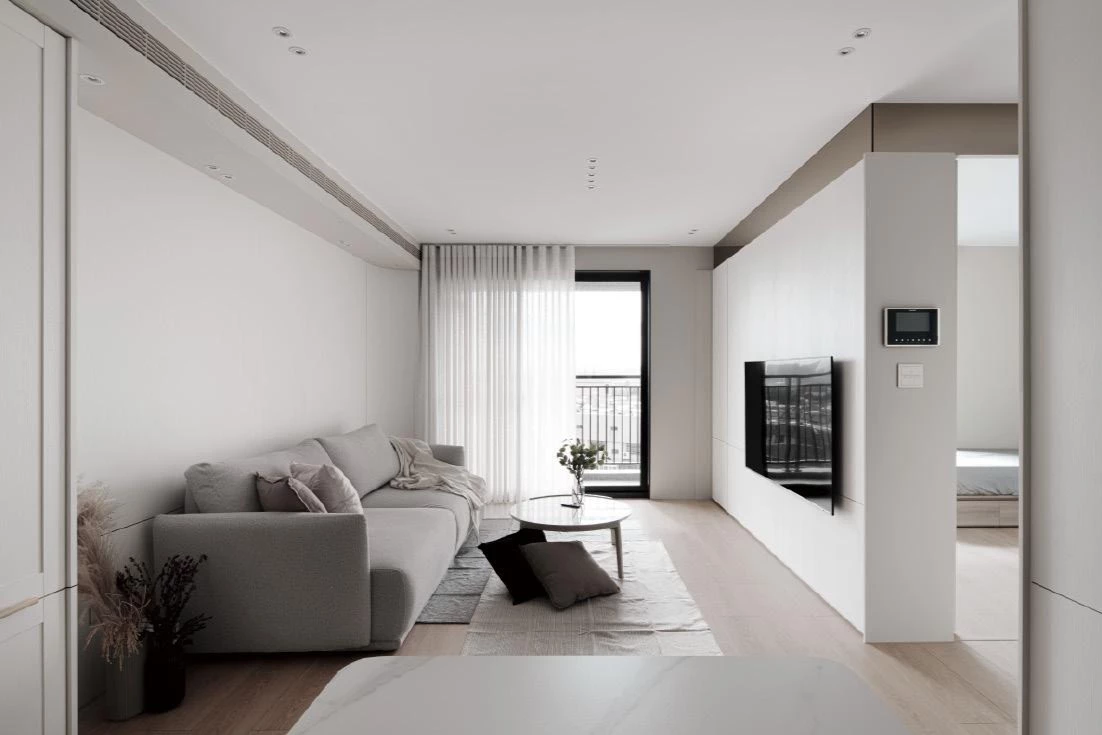
業主夫妻特別在意孩子的活動範圍的寬敞度與安全性,因此公領域追求高度開放與流動性,同時強化安全細節,幾乎所有轉角皆以圓弧收邊。客廳選用機動性高的雙向沙發,提供靈活的配置彈性,必要時能將其推至一側,為相連的多功能區騰出寬敞場域,成為孩子的遊戲天地,也是親子共享的生活場景。
The homeowners place particular importance on the child's movement area within the home. As a result, the shared living area is highly open and fluid, with enhanced safety details—nearly all corners are finished with gentle curves. A dual-facing modular sofa is chosen for its flexibility, allowing it to be pushed aside when needed to open up a generous play zone in the adjoining multipurpose area. This becomes both a play haven for the child and a shared environment for family life.


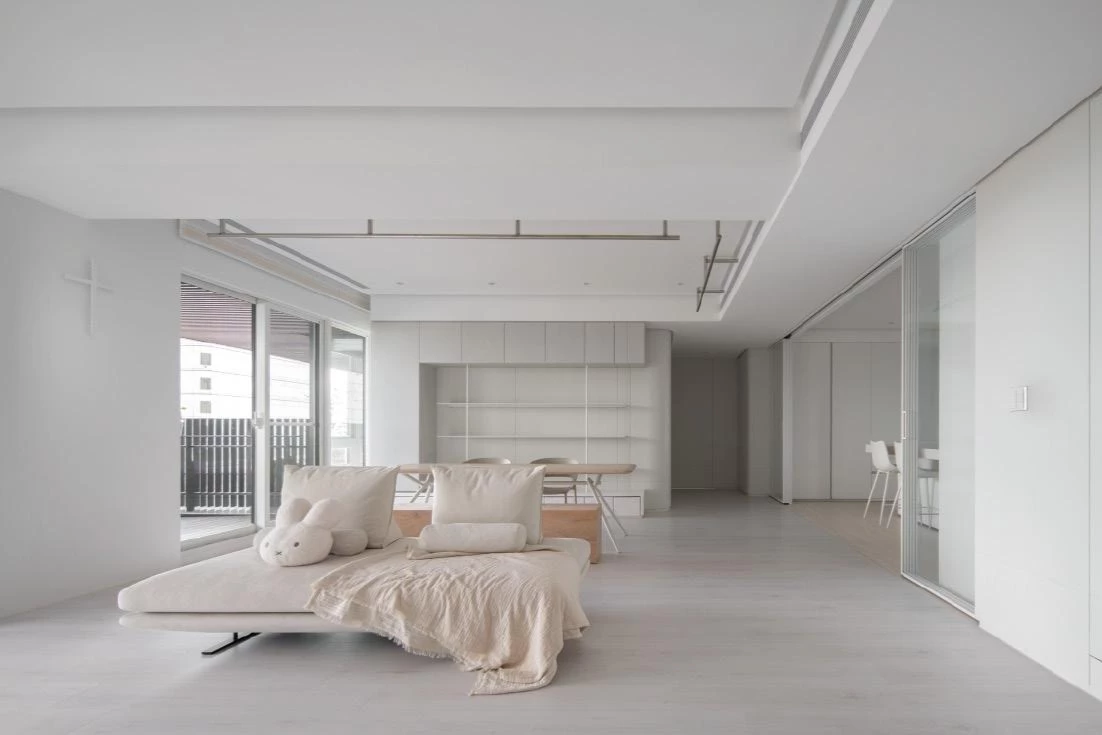
設計師運用拉門設計放大採光優勢。當門片全數敞開,光線可從側邊連通至整個公領域,延伸視覺深度,同時模糊空間界線。窗簾選擇輕盈可透光的材質,讓自然光柔和灑入各個角落。視線向上,天花的設計亦別具巧思:沙發上方橫跨一道大樑,未採包覆手法,反而以保留最大淨高為優先,並於樑體邊緣加入細緻燈條,使其化作引導視覺的軸線,淡化量體感,也提升輕盈氣息。
The designer integrates sliding doors to amplify the natural lighting. When opened, these doors allow light to flow from the side window through the entire space, extending visual depth and softening spatial boundaries. Lightweight, translucent curtains are used to let in soft, diffused daylight across every corner. A large beam spans above the sofa area. Rather than concealing it, the designer prioritized preserving maximum ceiling height and added a subtle light strip along the beam's edge, turning it into a visual guide that reduces its volume and adds a sense of lightness.

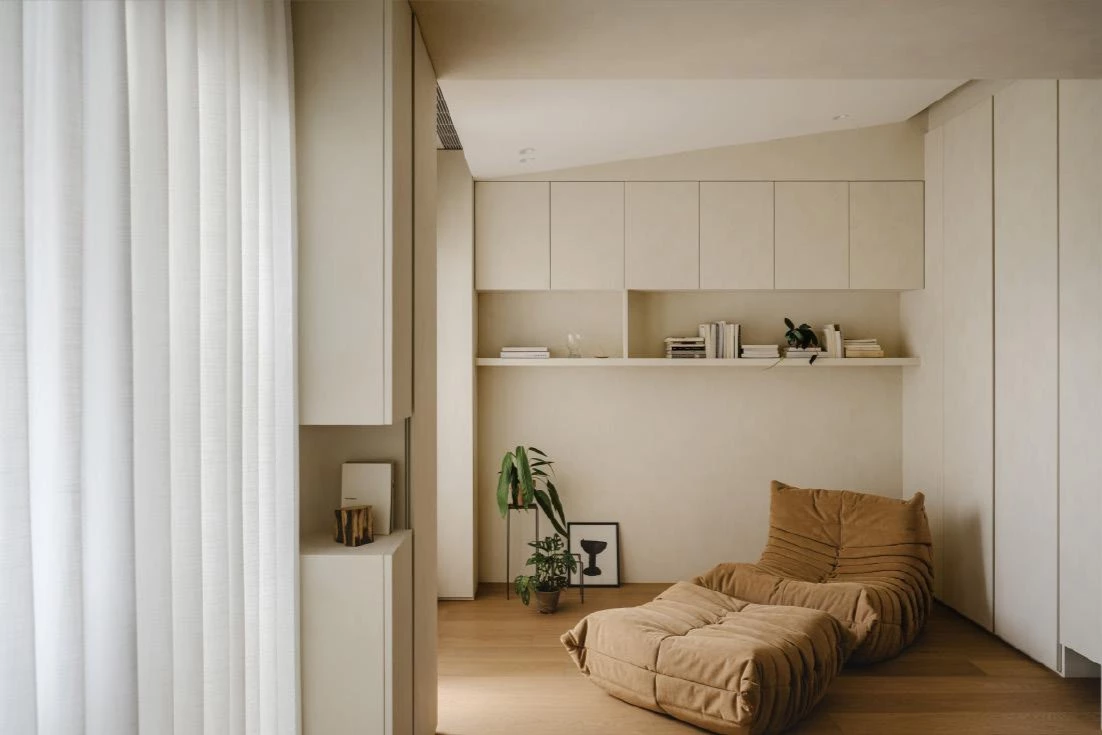
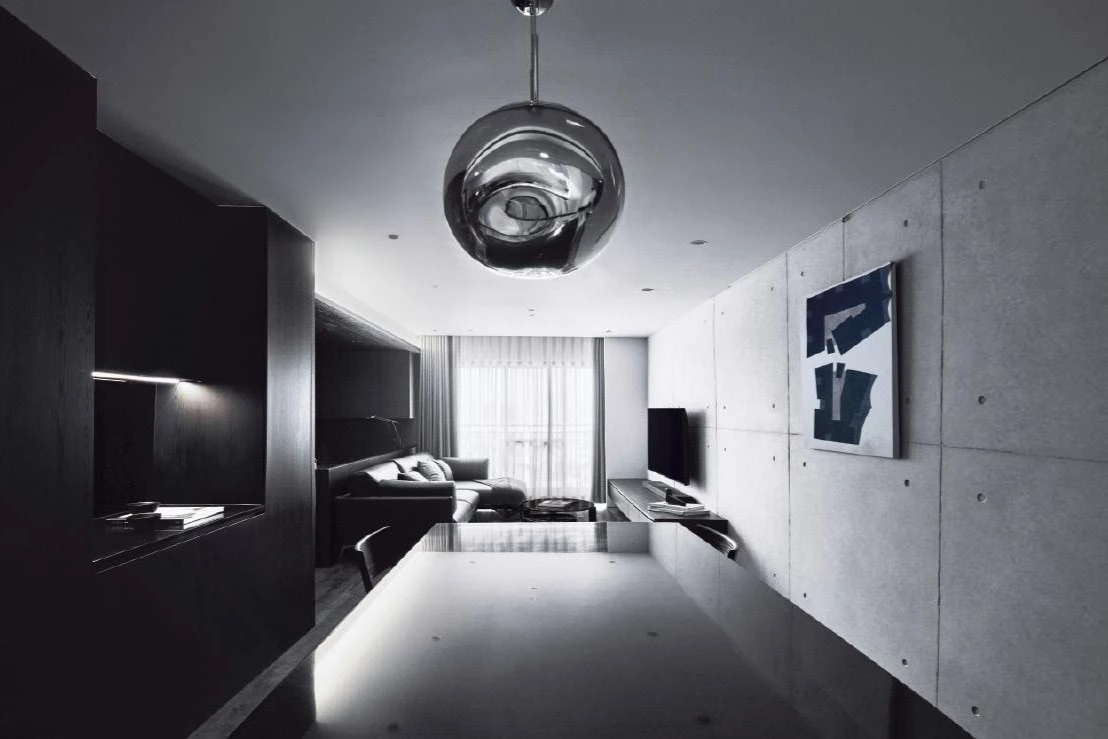
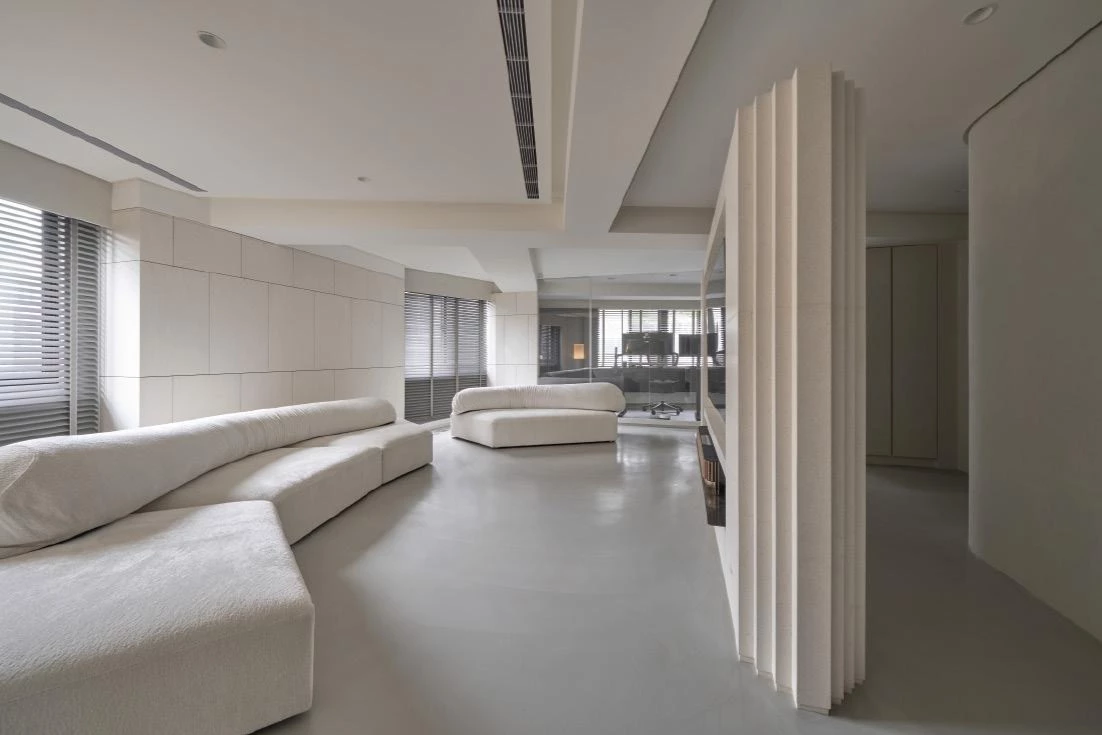
全屋以白淨明亮為基調,並在細節處融入弧形語彙。位於餐廚交界的迷你吧台,以一抹弧線界定轉場端景,既遮擋視線,又讓光線得以柔和漫射,形塑空間節奏的起伏感。機能配置方面,不僅著眼於收納容量,更在意如何於有限坪數中創造高效儲物。團隊捨棄傳統框構式儲藏室,改以與地坪齊平的隱藏櫃形式呈現,打開後是一整面可彈性調整的收納空間,大型物件如行李箱、電風扇等皆能輕鬆收納,日常則維持視覺整潔與空間純粹。
The overall interior adopts a clean and bright palette, with curvilinear elements subtly woven into the details. A small bar at the intersection of the dining and kitchen areas features an elegant curve, offering a soft visual partition while allowing light to diffuse gently—creating a rhythm of spatial transitions. In terms of functionality, the design goes beyond storage capacity to explore how to optimize storage in limited space. Recognizing the constraints of a small apartment, the traditional walk-in storage room is replaced by flush, concealed cabinets. Once opened, they reveal a fully adjustable storage system that easily accommodates bulky items like suitcases or fans, while maintaining visual clarity and spatial simplicity in everyday use.

呼應屋主簡約的生活哲學,此案以白淨、開放、無壓迫感的語彙回應需求,並將大容量收納統整於餐廳牆面後方,讓其他場域擁有更高的使用彈性。透過一連串空間策略,有效提升坪效,同時保留家的光感與空氣感,實現小宅的大器尺度。
Reflecting the homeowners' minimalist lifestyle, this project responds with whiteness, openness, and airiness. Generous storage is discreetly integrated behind the dining room wall, maximizing flexibility in the rest of the home. Through a series of spatial strategies, the design enhances spatial efficiency while preserving natural light and ventilation.


主要設計:吳啟安.黃心妍.施禹彤
空間面積:63 ㎡
主要建材:特殊漆.木地板.燈條.折門.小冰柱玻璃.弧形.定製家具.繃板
座落位置:新北市新莊區
影像:崴米鍶空間攝影
採訪:蘇新婷
核稿:陳宗瑩
追尋円圓,緣起光至
Seeking the Origin of Circle, Comes the Light.